

Welcome to the PLAYGROUND, weary friend.
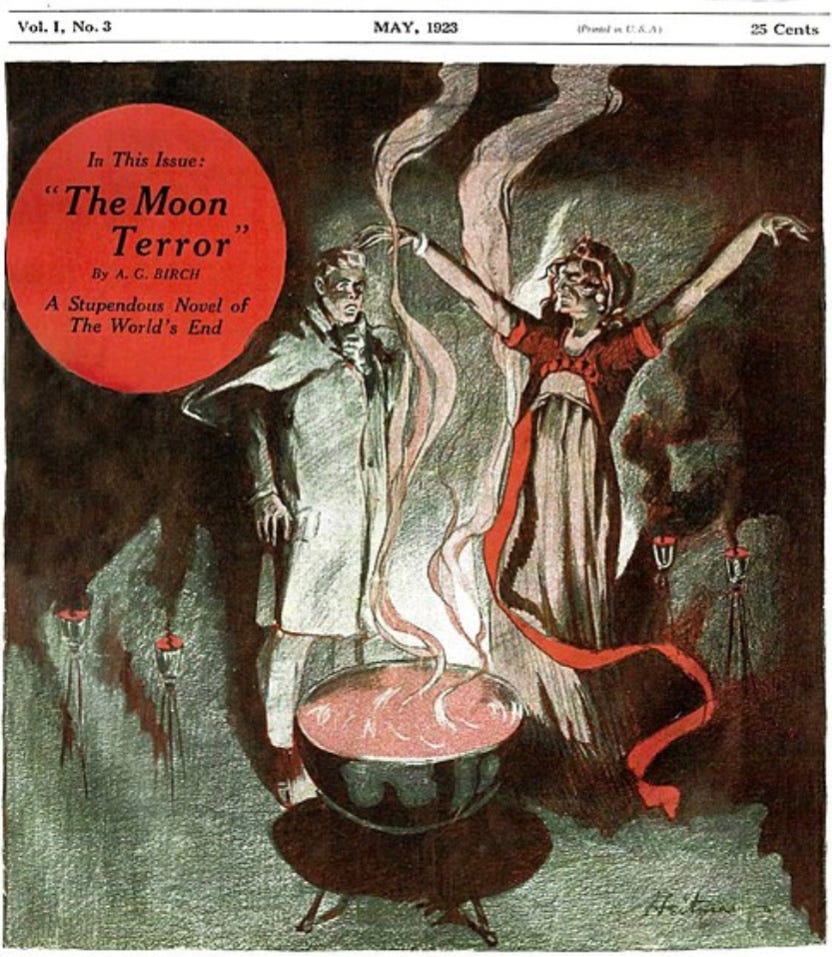
I was introduced to the works of H. P. Lovecraft as a young adult and fell hard for his cosmic horror mythos. That interest led to forums, archives, and the forgotten corners of turn-of-the-century pulp magazines—most famously, Weird Tales. Paired with the folktales of Japan, these stories became the foundation of what I’m now calling my own UNCANNY FICTION.
Because works of fiction published before 1929 now exist in the public domain, I’m able to share curated tales from that era with you—stories that once unsettled me and, in some cases, still do. Below, you’ll find a downloadable PDF of tonight’s selection, along with my personal review. I claim no copywrite to this original work.
So lock the doors, check under the bed, and prepare yourself for “The Floor Above.”
** Here is the PDF story file for download **

Whispers louder than screams.
Some horror stories announce themselves loudly. They bring monsters, blood, and revelations. The Floor Above by M. L. Humphreys does none of that, choosing to whisper, instead. And somehow, that will stay with you longer than most of the genre’s screams. Even details of the author are shrouded in a mystery, as nothing is known about him, save for this one attributed piece of work.
First published in Weird Tales in 1923, “The Floor Above” stands as the only known work attributed to M. L. Humphreys—a single, quiet artifact left behind in a magazine, itself an artifact of a bygone literary age. It arrived without a body of work to contextualize it, without a mythology to frame it, and then its creator vanished from the record entirely.
The story is aggressively simple:
A man receives a letter from a friend thought dead, visits him, and discovers that something is terribly wrong with both the house and the life being lived inside it.
There is no baroque mythology, no sprawling explanation. Just unease, gradually tightening.
What makes The Floor Above effective is its restraint. Humphreys didn’t chase shock. Instead, the story works through atmosphere and implication. You can imagine the house feeling wrong long before anything develops. The narrator’s friend alters in subtle, unnerving ways—physically diminished, and emotionally hollowed. It all suggests truth existing just beyond the edge of understanding, which, in the case of the story, is a forbidden room hanging overhead. A floor that must not be entered, the knowledge that must not be confronted.
By the time the narrator realizes what has happened to his friend, it is too late. The real horror is not simply that something monstrous exists, but that it has already won. The violation is complete. The body is occupied. There is no battle left to fight.
I, too, have written about this sense of inevitable loss before.
There’s also something deeply intimate about the story’s framing. This is not a researcher uncovering a cosmic secret or a detective solving a strange case. This is a friend visiting another friend. The themes are not abstract—they are personal. We aren’t asked to fear an evil force so much as we are asked to grieve a human being who is already gone in every way that matters.
I think that’s why this story endures. Not because it frightens in the moment, but because it introduces a thought that quietly takes root: What if the person I’m speaking to is no longer who they appear to be?
That kind of fear follows you back into ordinary life. Into familiar houses. Into conversations with people you think you know. Which, to me, is the highest achievement of horror.
Thank you for your time.
If this kind of story speaks to you—if you’re drawn to the quiet, unsettling corners of horror rather than the loud and obvious—then I invite you to support the PLAYGROUND. Every share, every reader who lingers here helps keep these forgotten works alive. This space exists to curate, preserve, and explore the uncanny. If you believe there is still value in whispers over screams, you’re already part of it.
When I discovered Lovecraft he wasn't referred to as cosmic horror. I feel that subgenre is a relatively recent one that arose on the Internet. But it fits Lovecraft well. If you like cosmic horror in movies you might like an independent release titled The Endless.
Love the closing line.