


Welcome back. I’m pleased to see more visitors flocking here over the past month. Please take a tour of the place and enjoy all it has to offer. I’d recommend The Odditorium, which houses all the macabre curiosities of the world. Such as this very unsolved murder you are about to read.
Whenever I read about unsolved mysteries, there’s always a bit of a disconnect. I mean, killings that happen deep in the woods, across continents, or in abandoned places… they frighten me, of course, but only from a safe distance. Belonging somewhere else, I can close the article and walk away unchanged. But home invasions — those are different. When someone’s sanctuary is split open, when a stranger steps over the line between outside and in, that’s when my skin crawls, and I find myself checking the dark corners of my home before bed. Because if danger can walk through your front door, then what is truly safe?

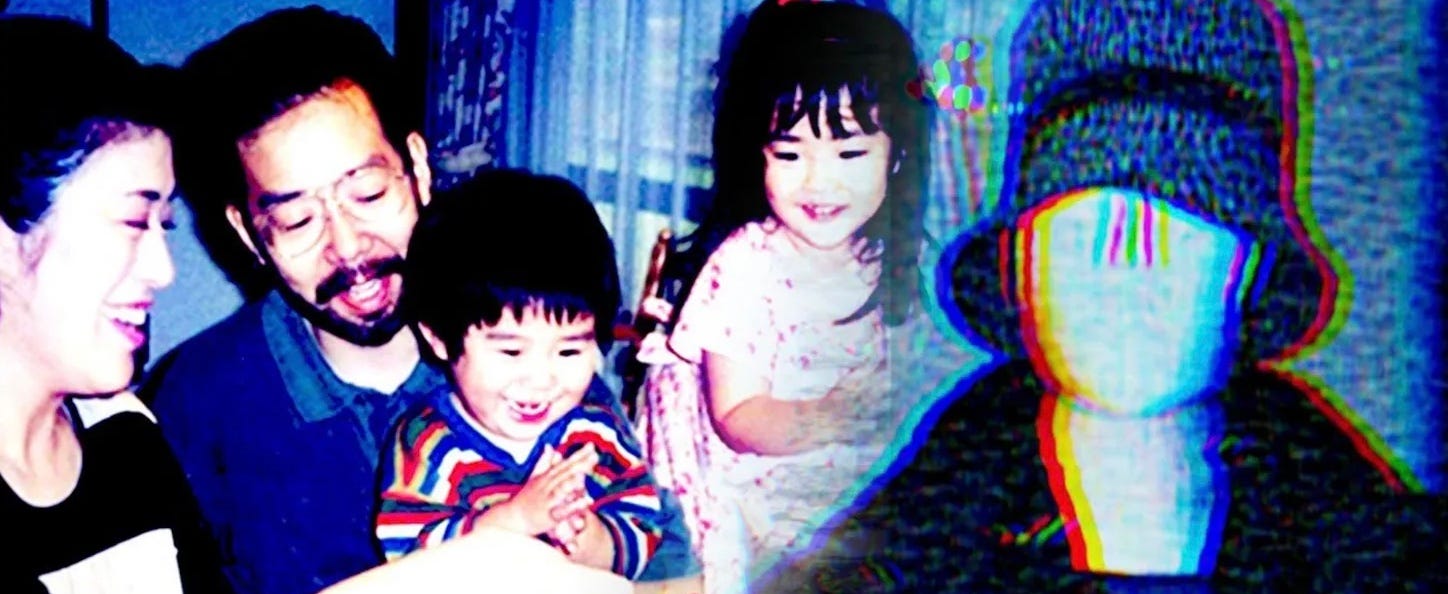
The intruder
I keep coming back to one image in this case: a man walking down the stairs inside another family’s house on the night of December 30th, 2000. The house where their children played. Where dinner was cooked. Where shoes waited by the door. That was what Mikio Miyazawa must have seen. A nightmare descending his own stairs. Sometime after 11 p.m., the killer is believed to have climbed into the house through a second-floor bathroom window facing the park. Investigators later found a fly screen removed and footprints in the mud outside.
And once inside, the attack was as brutal as it was personal. Rei, the family’s youngest son, was strangled first. Mikio, his wife Yasuko, and eight-year-old Niina were then stabbed repeatedly — wounds so violent that fragments of the sashimi knife were found embedded in Mikio’s skull.
It should have ended there.
But it didn’t.
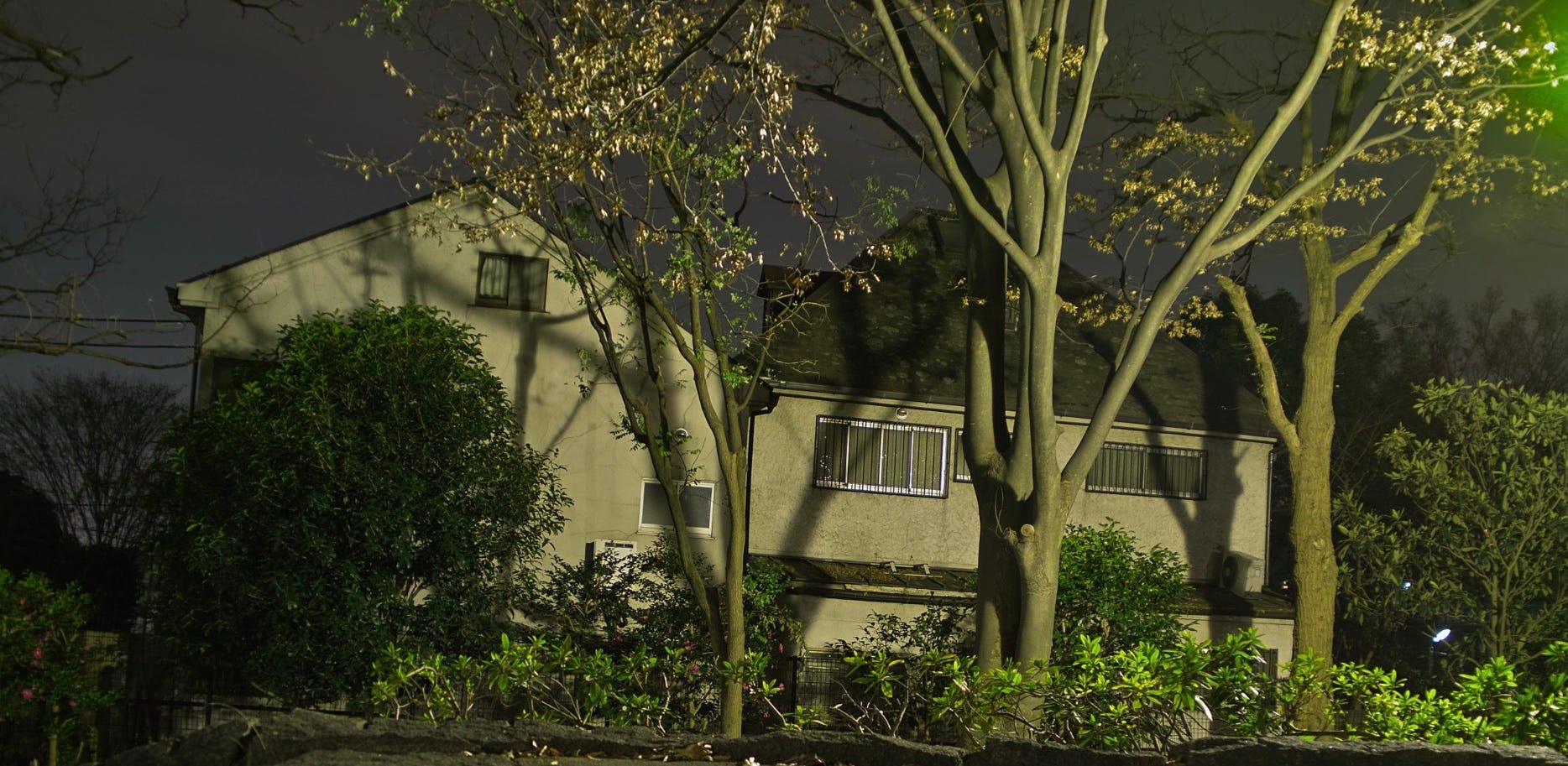
The unthinkable
Most killers flee, but as unbelievable as it is, this one stayed. Not for minutes — for hours. He even used their bathroom. Draws were rummaged through. He ate their food — melon, ice cream, barley tea, all as scraps in the kitchen. It’s believed he called numbers on the house phone. At 1:18 a.m., the family computer connected to the Internet.
For once, investigators did not have to hunt for evidence. It was everywhere.
Two knives — one broken.
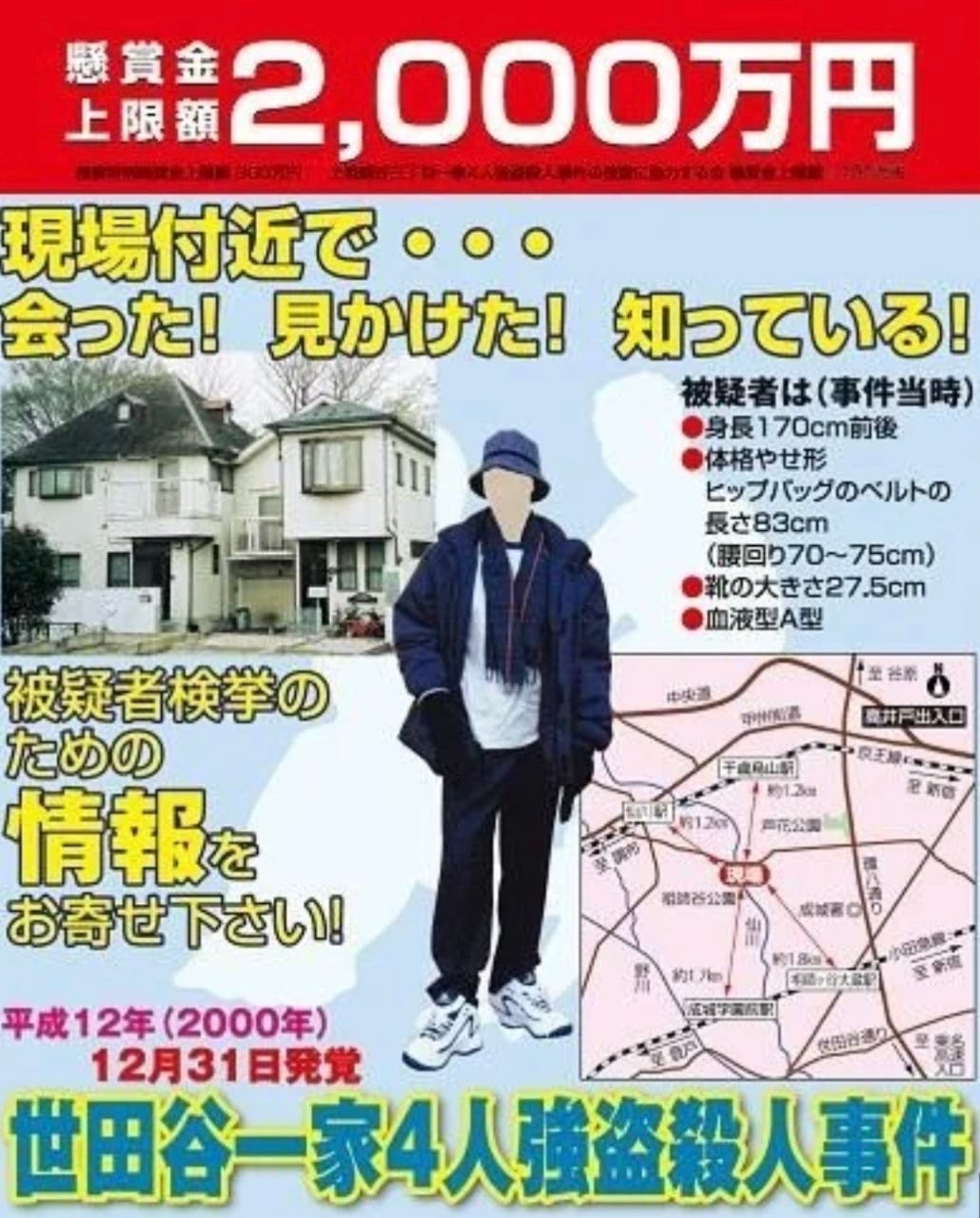
Clothing — jacket, scarf, hat, gloves, shoes.
Fingerprint traces.
DNA.
Even the killer’s own excrement.
The hip bag he left behind held grains of sand later traced to foreign locations — including one reportedly matching soil from a desert area near a U.S. air base in California, and another from a Japanese skate park. His outfit was narrowed down to a limited production run — just 130 sweatshirts sold nationwide. You’d think with more than 246,000 investigators involved, over 12,500 pieces of evidence cataloged, and thousands of DNA and fingerprint comparisons, the killer would be caught.
And yet, in Setagaya, it only led nowhere..
The killer left a mountain of data.
And not a single breadcrumb to his identity.
The question that doesn’t go away
Do you think what is terrifying about this case is the brutality, or the bizarre behavior, or the abandoned clues?
I think it’s the void.
How does someone leave so much of themselves behind — and then disappear from the world without a trace? No matching DNA. No fingerprints on record. No family, no friends, no job, no school, no arrest, no passport check, no medical file, no database match in three decades.
Someone did this — and then went on living.
Maybe in Japan.
Maybe somewhere else.
Maybe in the house next door to someone who is reading this right now.
After reading the Setagaya case, about that intruder walking down the Miyazawa family's stairs, I stopped feeling like the world is so safe. Danger is closer to us than we’d like to accept. Now, I feel every shadow in my hallway come alive.
My only question is why.